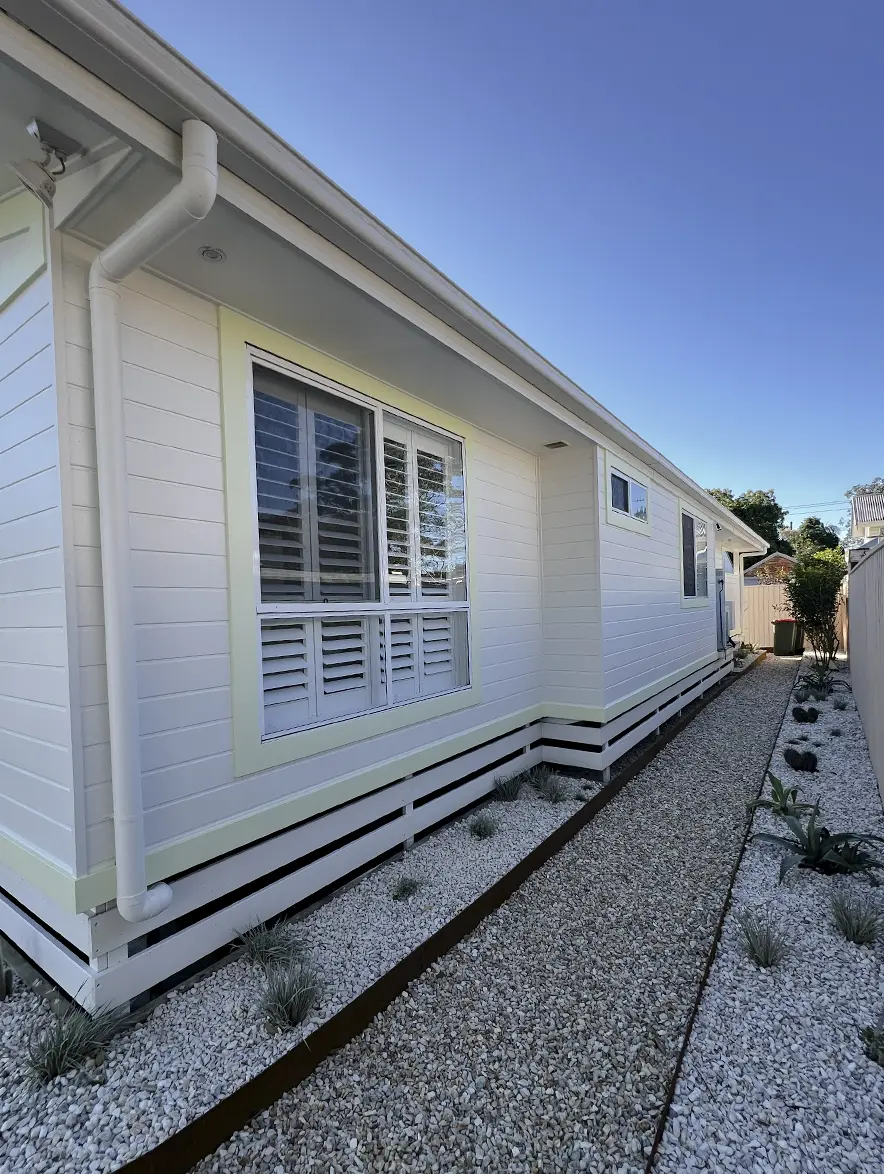
Exterior coatings do not fail overnight. They give you roughly a year of warning if you know what to look at, and the difference between acting then and leaving it is usually the difference between a repaint and a carpentry job.
Here is what to check, in the order the signs tend to appear.
1. Chalking
Run your hand along a north or west facing wall. If it comes away with a fine powder, the binder holding the pigment together has broken down under UV. The coating is still physically there, but it has stopped doing its job.
2. Hairline cracking
Fine crazing across the surface means the paint film has lost its flexibility and can no longer move with the substrate underneath. From the street it still looks fine. This is the last genuinely easy moment to repaint.
3. Flaking at joins and fixings
Where two materials meet, movement concentrates: timber to render, wall to window frame, around nail heads and screw fixings. Flaking at those points means water is getting behind the coating rather than running off it.
4. Uneven colour between elevations
North and west walls take the UV load and fade first. Once the difference between two elevations is obvious from the driveway, the coating has given what it has.
5. Timber that gives under pressure
Press a fingernail into weatherboard near the ground line, behind downpipes, or anywhere that stays damp. If it yields, that section has moved past painting and into replacement.
The first four signs are a paint problem. The fifth is a timber problem, and it costs considerably more to solve.
Why the timing is the whole point
Repainting sound timber is a straightforward job with a predictable scope. Repainting timber that has been open to the weather through two wet seasons means replacing boards, treating rot and rebuilding sections before a brush comes near it.
On the Northern Rivers coast this moves faster than inland. Salt air, humidity and long wet stretches shorten the window between the first sign and the point where the substrate is affected. Checking the walls once a year, at the end of the dry, costs nothing and tells you most of what you need to know.